Mazda 3 How to Read Coolant Temperature Gauge
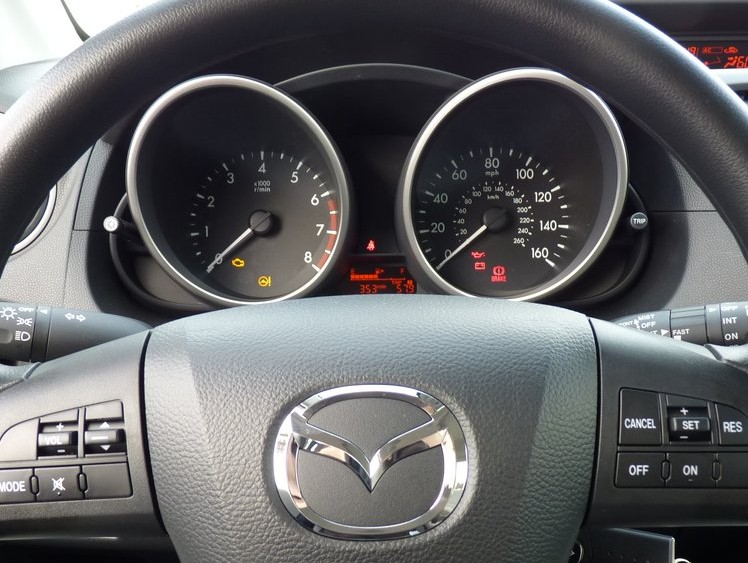
gauge cluster - 2012 Mazda5
February 28, 2011
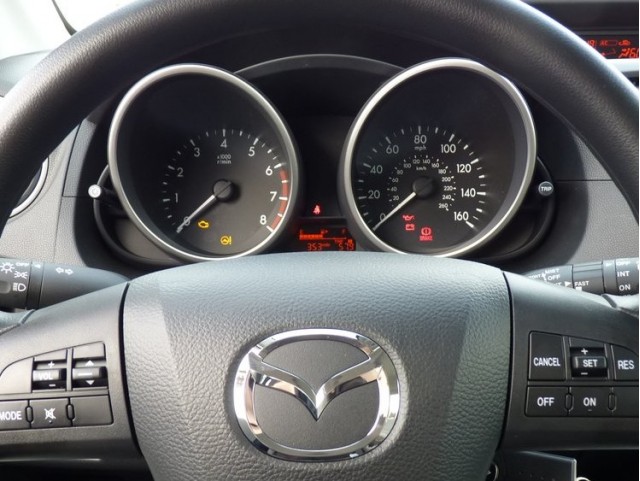
gauge cluster - 2012 Mazda5
While cars are coming with increasingly complex instrument panels, you might notice one feature is missing from your new vehicle: the coolant temperature gauge.
Over the past several years, we've noticed the trend across a wide range of vehicles. Such is the case, too, with the latest versions of the Mazda3 introduced last yr, and with the new 2012 Mazda5 we drove this past week.
And it actually has nada to do with cost-cutting, or with lean instrument-panel design (although we do like the new hooded gauge clusters in Mazda's latest vehicles, with their big circular dials).
According to Robert Davis, Mazda's senior vice president for quality, research and development, there'southward a cool blue 'cold' light instead of a temperature gauge considering of consumer psychology: In short, owners are more likely to bulldoze gently—and "not thrash the engine"—if there'due south a light on than if the temp gauge only shows cold.
At that place'due south a lot of misinformation in question-and-answer sites about revving an engine when cold. For the truth here, look at nearly any vehicle owner'southward manual; almost suggest confronting revving an engine besides high when cold, for good reason. The alloy parts of an engine don't fit together in quite the same style until fully warm, and the oil pump has to work especially hard to get oil into the smallest spaces when the oil is thicker.
And with the thinner oils existence introduced this year and over the side by side several model years—allowing better fuel economic system and skilful loftier-rut protection—they counterintuitively place engines under higher stress in cold starts.
For 2011, Mazda is transitioning to zero-weight (0W20) synthetic motor oil in all of its four-cylinder engines, which enables an extended service interval of 10,000 miles in lite-duty use (easy highway driving) or 7,500 miles in normal use (more stop-and-go, shorter trips).
Some might be disappointed to see these gauges go abroad, every bit slight variations in coolant temperature are often your first sign that thermostats are sluggish or radiator passages are becoming clogged or corroded.
Merely based on several follow-up questions with other automakers' engineers, temperature gauges aren't going away completely; we'll continue to see them in operation vehicles, likewise as in vehicles that are often modified in the aftermarket.
While cars are coming with increasingly circuitous musical instrument panels, you might find one feature is missing from your new vehicle: the temperature gauge.
Over the by several years, we've noticed the tendency across a broad range of vehicles, with many models dropping the traditional coolant-temp judge.
Such is the case, too, with the latest versions of the Mazda3 introduced last year, and with the new 2011 Mazda5 we merely drove this past week.
//www.thecarconnection.com/marty-blog/1055897_2012-mazda-mazda5-start-drive
And it really has nothing to do with toll-cutting, or with lean musical instrument-panel pattern (although we do similar the new hooded approximate clusters in Mazda'southward latest vehicles, with their large round dials).
According to Robert Davis, Mazda'due south senior vice president for quality, research and evolution, there's a absurd blueish 'common cold' light instead of a temperature gauge because of consumer psychology: In curt, owners are more likely to drive gently— and "not thrash the engine"— if there'southward an idiot light on than if the temp gauge just shows cold.
There's a lot of misinformation in question-and-reply sites about revving an engine when common cold. For the truth here, await at nearly whatever vehicle owner's manual; nigh advise confronting non revving an engine as well loftier when cold, for good reason. The alloy parts of an engine don't fit together in quite the same manner until fully warm, and the oil pump has to work especially hard to get oil into the smallest spaces when the oil is thicker.
And with the thinner oils being introduced this year and over the next several model years—allowing better fuel economy and good high-heat protection—they counterintuitively place engines under college stress in cold starts.
For 2011, Mazda is transitioning to zero-weight (0W20) synthetic motor oil in all of its four-cylinder engines, which enables an extended service interval of x,000 miles in light-duty use (easy highway driving) or 7,500 miles in normal apply (more stop-and-go, shorter trips).
Some might be disappointed to see these gauges become abroad, as slight variations in coolant temperature are frequently your outset sign that thermostats are sluggish or radiators passages are condign chock-full or corroded.
But based on several follow-up questions with engineers at other automakers, temperature gauges aren't going away completely; we'll go along to see them in performance vehicles, equally well as in vehicles that are typically modified in the aftermarket.
Recommended Galleries
People who read this also read
The Machine Connexion Daily Headlines
Source: https://www.thecarconnection.com/news/1056051_why-does-my-new-car-have-no-temp-gauge
0 Response to "Mazda 3 How to Read Coolant Temperature Gauge"
Post a Comment