When to Feed Electrolytes to Horses
June 8, 2022 When humidity soars and the mercury in the thermometer reaches epic heights, you know it's time to start chugging electrolytes. Especially if you're out for hours on the trail or in the paddock sweating in the summer heat. But what about your horse? You're probably aware it's important to feed your partner a daily serving of salt. But does a horse need electrolytes as well? Are salt and electrolytes the same thing? Do you know which you should give your horse, and when? First, we need to understand that salt is an electrolyte, but it isn't the only electrolyte horses need. Confused? Let's clear the cloudy waters and discuss what equine electrolytes are, when horses need them, what happens if they don't get them, and what to look for in an electrolyte supplement. Should I Give My Horse Salt or Electrolytes?

What Electrolytes Do Horses Need?
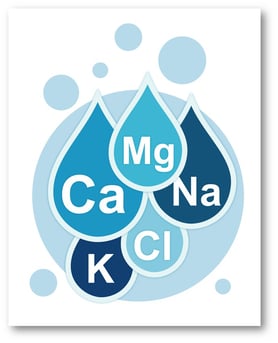 At some point, you've probably spent a long day in the saddle, neglected to drink enough water, then pounded a sports drink or two to pick up your energy and ward off a headache. The main electrolytes added to most electrolyte drinks are also the same equines need—except in supplements formulated for horses. Major electrolytes for horses include:
- Sodium (Na)
- Chloride (Cl)
- Potassium (K)
- Magnesium (Mg)
- Calcium (Ca)
All five are essential. However, salt, created when sodium and chloride (NaCl) are combined, is required by horses in the greatest quantity, followed by potassium, then magnesium and calcium.
Signs of Electrolyte Imbalance in Horses
Every horse sweats. Within that sweat are copious amounts of expelled electrolytes. In fact, a horse that's exercised heavily can lose up to 4 gallons of sweat per hour, equating to approximately 30 teaspoons of lost body salts. That's a lot of sweat and salt!
However, a horse doesn't have to be worked into a lather to lose loads of electrolytes. Any horse that sweats for a prolonged time can deplete these vital minerals to critical levels. The amount of electrolytes your horse may lose through sweat depends on temperature, humidity, workload, and the duration of all three. Electrolytes are also lost through urine and manure—particularly diarrhea, which can drain fluid and minerals in a hurry, causing dehydration.
Here are some symptoms of electrolyte deficiency to watch for in horses:
- Fatigue
- Poor performance
- Reduced sweating
- Decreased drinking
- Decreased eating
- Muscle tremors
- Tying up
Since electrolytes are not stored in the body, any time large amounts are lost, they must be replenished to help horses rehydrate and recover. This is where you can step in with either a mineral salt, electrolyte, or both.
When to Give Your Horse Salt vs. an Electrolyte Supplement
Let's say your horse has worked and sweated hard on the trail. Or she's been traveling for two days in mid-July. Or he's simply hanging out in the pasture when the first sweltering spring day hits. Your horse looks a little droopy and you suspect it needs additional fluids and electrolytes. Should you provide extra salt or an electrolyte supplement to replenish minerals and encourage drinking?
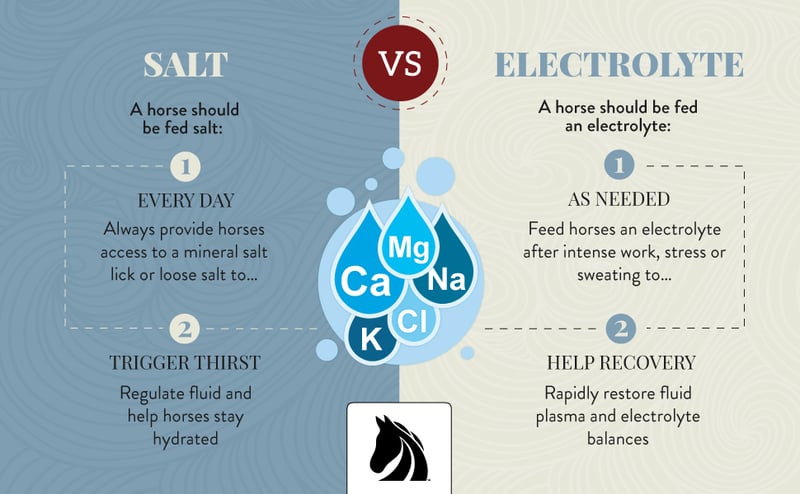
Good question. Horses need salt daily and occasionally an electrolyte supplement. Each of the situations above would likely warrant both. Let's look more closely at when to feed your horse salt versus an electrolyte, and what each does for horses.
Feeding Salt to Horses
Salt helps trigger the thirst response that tells horses to drink. A horse's brain monitors sodium levels and tells horses to stop drinking when levels are low. This is to avoid flushing more sodium from the body. When sodium levels are normal, horses are more inclined to keep drinking regularly.
Providing a horse with salt helps sodium levels stay balanced and stimulates a horse to keep drinking. Without salt supplementation, many horses won't consume enough water on their own and risk becoming dehydrated.
In short, salt is a necessary part of a horse's everyday diet and should always be available. You can help your horse receive adequate salt by top-dressing a loose mineral salt on feed and offering a quality free-choice mineral salt lick. Learn more about daily salt intake recommendations for horses and how to avoid rare situations of salt toxicosis.
Feeding Equine Electrolytes
As mentioned, electrolytes are essential minerals that play a vital role in a horse's fluid retention. They're also involved in nearly every other bodily function. A quality supplement can replenish those electrolytes and speed up recovery time after exercise.
So do you need to give your horse electrolytes every day? Probably not. Then how often should you feed electrolytes to horses? An electrolyte should be given in addition to daily salt rations and is indicated whenever a horse experiences prolonged or repeated sweating, and occasionally in other circumstances.
Here are some vet-recommended situations when a horse may benefit from an electrolyte (view the full post by Dr. Jessica Huntington):
- Before and during trailering.
- Before and after a strenuous/stressful event or competition.
- After excessive sweating.
- During hot, humid, or extreme weather conditions.
- At the first sign of colic.
- At the first sign of loose manure or diarrhea.
We also like these tips for providing horses electrolytes from Iowa State University:
- Feed electrolytes according to the amount of work your horse performs.
- Start feeding electrolytes during training, not just on the day of competition.
- Electrolytes make a horse thirsty, so a lways ensure clean, fresh water is available.
- Always provide a salt lick to allow your horse access to extra salt at any time.
Also, if you're feeding an electrolyte in water, never add it to your horse's only water supply. Always provide a separate fresh water source.
How to Pick the Best Electrolyte Supplement for Horses
Now that you know the importance of occasionally offering electrolytes in addition to salt, how do you choose the best supplement for your horse? Here are three things to look for when selecting horse electrolytes:
- High salt content. Sodium chloride, then potassium, should be the main ingredients.
- Low sugar content. Sugar should not be the main ingredient. Glucose, a simple sugar, helps water and electrolytes absorb, but should be present in small amounts in supplements.
- Isotonic to sweat. Look for a supplement that provides electrolytes in similar concentrations as sweat. A sweat-like solution will rapidly restore fluid and plasma electrolyte imbalance in horses ( PubMed).
Barrel racer Autumn Snyder uses Redmond Electrolyte paste to keep her horse hydrated and performing her best. Watch the two-minute video below to see her story!
Redmond Equine Electrolyte Paste
Redmond Electrolyte syringe is a fast-acting paste formulated for horses that rapidly replenishes critical electrolytes and vitamins. It improves energy and performance with natural ingredients you can trust. Our easy-to-use metered syringe contains:
- Sodium, chloride, and potassium as the main ingredients.
- Low sugar content.
- 60+ trace minerals for horses harvested from our Redmond mineral deposit.
- Added vitamins A, B, D, and E for improved health and performance.
- Great peppermint flavor!
- Click here to see Electrolyte's full mineral analysis and ingredients.
Redmond Electrolyte paste rehydrates and helps your horse stay in peak form. Click below to learn more or try our product today!

Learn More
- Worried your horse may be dehydrated? Check for these 5 symptoms of dehydration.
- Some horses struggle to get enough salt and minerals from a lick alone. Learn how switching to a loose salt can better meet your horse's energy demands.
© Redmond Equine 2022. All rights reserved.
Source: https://blog.redmondequine.com/should-i-give-my-horse-salt-or-electrolytes
0 Response to "When to Feed Electrolytes to Horses"
Post a Comment